
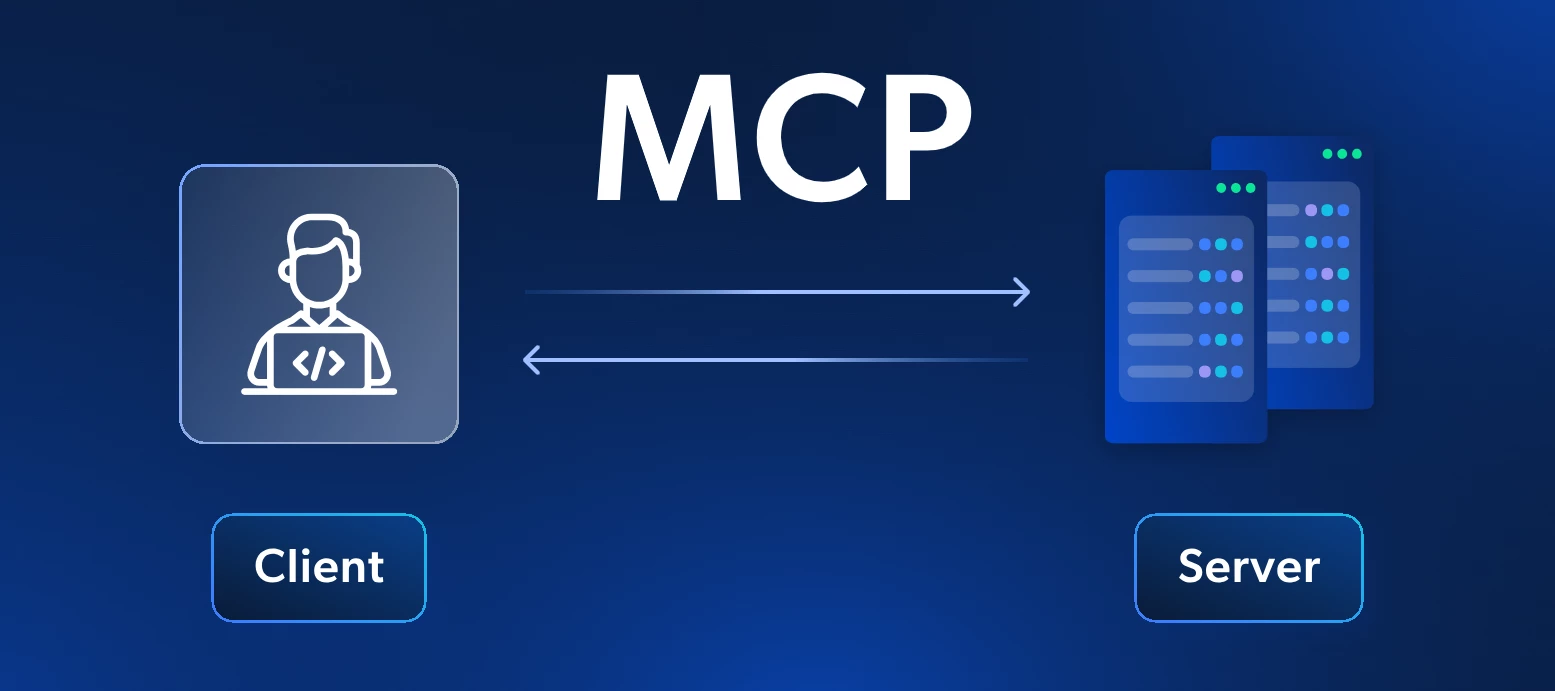



Since launch less than 2 years ago, the Model Context Protocol has become the de facto standard for integrating systems with LLM chat interfaces or AI Agents. MCP Servers are popping up everywhere, in varying quality when it comes to capabilities, security and governance. Either software vendors offer an officially supported MCP server, or else unofficial (often vibe-coded) MCP Servers pop up.
As with any runtime component, an MCP Server for the Thinkwise Platform should work for all customers and all applications. Developing such a dynamic component takes a bit more time, but in return a Thinkwise-provided MCP Server works for all customers, all Application models and all future changes to your Application out-of-the-box. And since we develop the Software Factory and Intelligent Application Manager (IAM) with the Thinkwise Platform as well, we can implement MCP for the Software Factory and the Intelligent Application Manager in a similarly fast fashion as you can for your applications.
We have made the MCP Server capabilities of the Thinkwise Platform part of runtime component Indicium, no separate installation is required to get your hands on this new technology. From a functional perspective we rely as much as possible on existing features in the Software Factory and IAM, mainly Roles and Client applications. This is our Technology-as-a-Service promise at its best: as soon as you upgrade to a supported version, MCP can be utilized!
MCP will be launched in BETA with Short-Term Support (STS) Platform version 2026.2.12 and become an officially supported and licensed feature with Platform version 2026.3. More details on required setup will be shared in a separate blog.
MCP democratizes integration
The Model Context Protocol is often referred to as the USB-C for applications: one standard connector to power applications with AI capabilities. The OData protocol is a similar standard for REST APIs, but requires technical expertise by the user and is much more rigid to use. MCP places the responsibility and burden of integration at the supplier of the API, instead of the consumer of the API.
The key differentiator of generative AI + MCP is that users can use natural language to interact with organizational data in an iterative manner. Essentially, this enables any user to set up an integration with an application and use a language they know to put that integration to work with trial and error. Without generative AI you needed to be capable of using a technical language like OData and without MCP you needed to know exactly how to construct the URL Endpoint and the JSON Body of the call.
Now, all that’s needed is an AI tool that supports this (for example Claude Desktop, Claude Code, OpenAI Codex, Copilot Studio), is Setup MCP Server > Authenticate > Grant permissions and the user is ready to go!
MCP as translator
MCP begs to be applied to compelling use cases, but where does it shine? Generative AI and related tooling is not a silver bullet and not a solution to all integration problems, but it does hold the promise of solving problems that couldn’t be solved before!
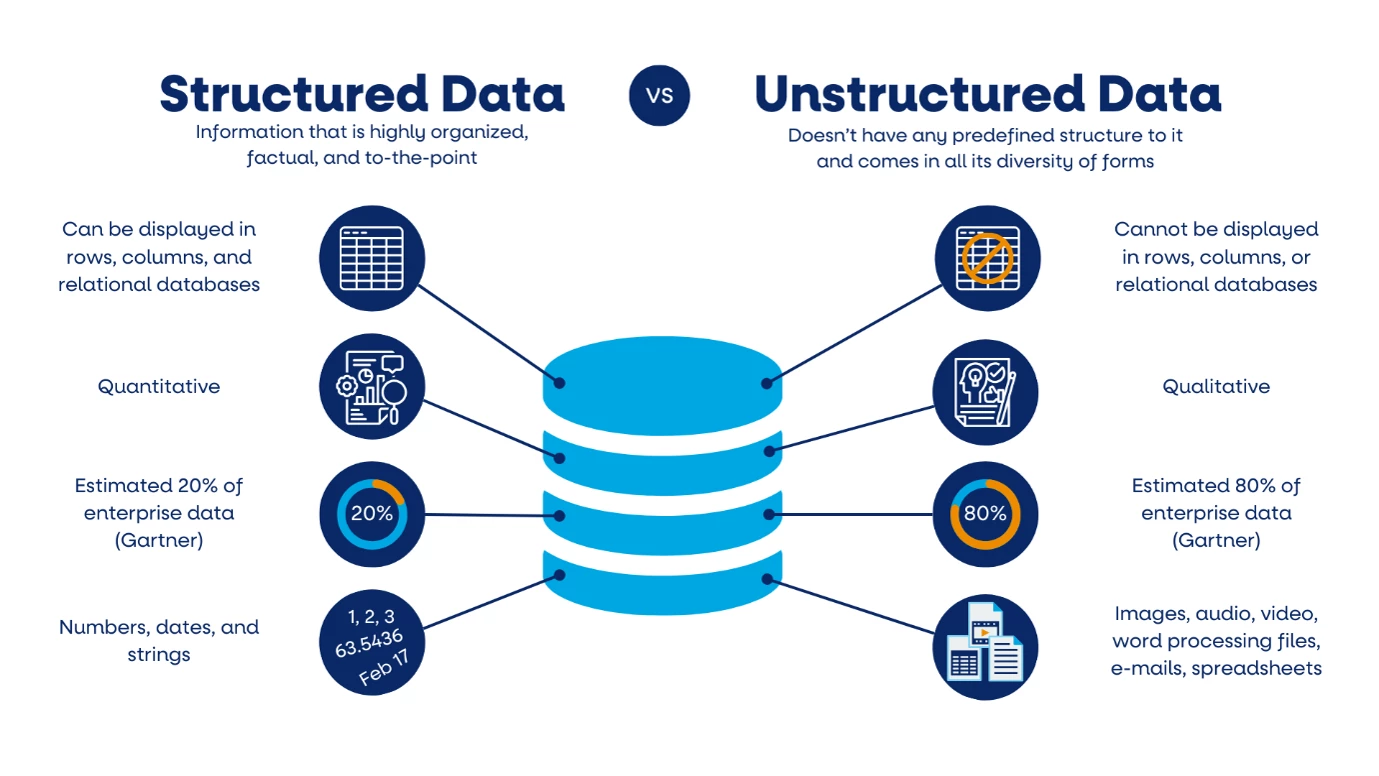
MCP shines at the translation layer between structured and unstructured data: turning unstructured input into structured data, or structured data into something a person can read. A plain-language support request becoming a properly filed ticket. A pile of transaction data becoming a great visual report. An agent processing a messy email into a draft order.
Compelling use cases include:
- Easier & interactive search and summary of data
- Performing specific actions like booking hours or processing meeting summaries
- Automating repetitive actions like processing an incoming PDF invoice
- Informed interaction with an AI agent like a Support agent that helps triage an IT issue
- AI-driven Development to speed up and improve Software Development
More elaborate examples of compelling use cases will be shared in a series of follow-up blogs.
MCP poses risks
Before going all out on MCP, it’s important to mention the risks that AI imposes. While people tend to refer to generative AI tooling as if it has some sort of personality ("he"), it is wise to be aware of the fact that it’s a trained mathematical model that algorithmically predicts the next best word or action.
Importantly, AI at this stage can’t substitute for human judgment or experience. In other words: "AI is as good as its user" and AI doesn’t suffer consequences for being wrong. An extreme example of the potential negative impact is the deletion of the entire Production database of PocketOS.
For business-critical applications built with the Thinkwise Platform this means that you shouldn’t want your users or AI agents to connect to an unofficial MCP server and hand out credentials and entire permission sets in the process. Instead, you should treat any MCP-connected user or AI agent as less knowledgeable than your most junior hire initially.
While it makes sense for any human being that "write all open hours" refers to booking 8 hours for each past working day, AI might as well decide to book hours for 24 hours for each past or future day available. Or worse, "clear approved invoices" for a finance person might mean paying these invoices, while AI might as well decide to delete the invoices altogether without ever paying them.
Enterprise-grade Thinkwise MCP
Applications built with the Thinkwise Platform are business-critical, which is why we prioritized providing an enterprise-grade MCP Server solution with granular controls that allows you to mitigate the above-mentioned risks. We utilize Client applications in IAM, authentication via OAuth 2.1 or Personal Access Tokens (PAT), and granular permissions based on IAM applications, users, and roles that explicitly need to Allow access delegation.
We recommend applying the Principle of Least Privilege and putting a Human-in-the-Loop for any AI-powered workflow, especially in the beginning stages. More specifically, we recommend creating and granting access to delegated Roles with permissions for Read data or Create data / Execute tasks (that result in data with concept status), but not for Update or Delete of existing data to begin with.
The initial implementation of MCP supports a core feature set of the Thinkwise Platform, including CRUD on subjects (variants are not exposed via MCP), Execute (table) tasks, and Data authorization pre-filters.
Roadmap
MCP will be launched in BETA with STS Platform version 2026.2.12 on the 3rd of August and become an officially supported and licensed feature with Platform version 2026.3.
During the MCP BETA you get to experiment with MCP for customer Applications, and we continue to improve the capabilities and efficiency. In parallel, we implement MCP support for the Software Factory with Release 2026.3. This includes an authorization and logging concept (tsf_is_delegated_access) and a granular setup of Roles in the Software Factory.
In parallel with our MCP development, many of you have been experimenting with custom MCP servers, AI-assisted development on the Software Factory and the use of Skills. We have already offered a Skill to update your Dynamic code with Release 2026.2 and are now testing to what extent Skills prove to be needed in addition to MCP integration with the Software Factory. We anticipate Skills over MCP will be adopted soon, and intend to use that to distribute Software Factory-related Skills in the future.
Using MCP Server in a Production environment will require an amended license agreement with Thinkwise, as Agentic AI via MCP typically automates and replaces human user interaction. MCP Server will be freely available in Develop and Test environments to empower you to experiment with MCP for end users and speed up development in the Software Factory.
We look forward to your implementation of compelling MCP use cases!